
Lu Deng, Jingping Yan, Yajiao Zhang, Feimei Wang, Jiawei Liu, Jincheng Du, Lili Hu
Shanghai Institute of Optics and Fine Mechanics, Chinese Academy of Sciences, Shanghai, China 315201
University ofNorth Texas, Denton, Texas, USA 76201
EXTENDED ABSTRACT: Glass materials often have complex compositions, and their structure and properties can vary due to changes in composition, resulting in what is known as the mixed former and modifier effects. It is thus challenging to design the composition and optimize the properties of these materials. The "glass genome" approach is an innovative research method used to study the structural properties of glass materials, which leverages the knowledge of glass chemistry, physics, and composition-property relationships. With techniques including data-driven machine learning method, it is able to better design new glass compositions. In addition, quantitative structure-property relationship (QSPR) analysis also plays a valuable role in glass genome research. It has been successfully applied to investigate various properties of glasses, such as density, glass transition temperature, and chemical stability. This study combines molecular dynamics simulations, experimental characterization, and QSPR analysis to gain a comprehensive understanding of the structure-property relationship in phosphate glasses. Additionally, a model has been established to describing composition-structure-property relationship. The results demonstrate the QSPR method is promising in predicting glass properties. By integrating machine learning with QSPR analysis, it can help select better glass compositions and control target properties, therefore facilitating the development and optimization of new glass formulations.
Keywords: Quantitative Structure-Property Relationship, Molecular Dynamics simulations; Machine Leaming
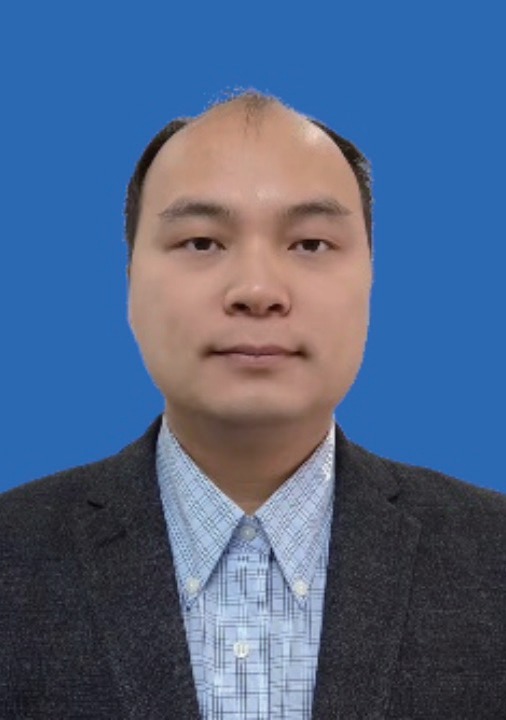
Dr. Lu Deng is a professor in Shanghai Institute of Optics and Fine Mechanics (SIOM), Chinese Academy of Sciences. He is also a recipient of the talent program of Chinese Academy Sciences and Shanghai. Dr. Deng received his Ph.D. from the Department of Materials Science and Engineering at University of North Texas (UNT), USA in 2017. He subsequently worked as a postdoctoral research associate at UNT. He joined SIOM as an associate professor in 2021 and was promoted to be a professor later that year.
Dr. Deng's research expertise lies in atomistic computer simulations and machine learning of glass and amorphous materials. He develops empirical potentials and computational tools to understand the structure, properties, and their relationships of the glass and amorphous materials. His research topics include composition-structure-property relationships, nuclear waste immobilization, corrosion and crystallization mechanisms, and other glass material related topics using multi-scale computational modeling and machine learning techniques. Dr. Deng's research has been funded by projects from NSF, DOE, SRC, AGC, Coming, and national projects from China. He has published over 30 peer reviewed papers and one book chapter, with Google Scholar citation over llOO. Dr. Deng is a frequent speaker on related topics in national and international conferences and has made around 20 invited or oral talks. He is currently an active reviewer of the Journal of Non-Crystalline Solids and Journal of the American Ceramic Society.